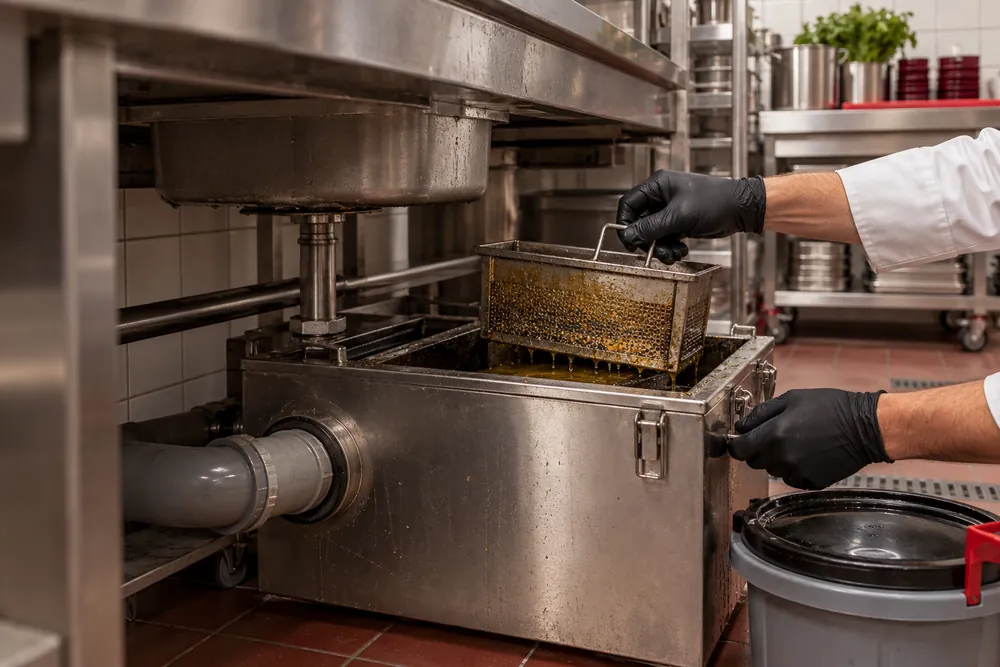
Keep Grease Management Working
A grease trap or separator slows wastewater so fats, oils and grease can separate from the flow. Solids can also collect inside the unit. If retained waste is not removed, usable capacity falls and grease can reach the downstream drainage, contributing to odours and blockages.
Restaurants, school kitchens, staff canteens and food production areas have different loading patterns. The unit type, connected appliances and manufacturer instructions all matter. An automatic grease removal unit needs a different daily routine from a passive separator that is periodically emptied and cleaned.
Tell us where the unit sits, whether it is above or below ground and when it was last serviced. Photos of the unit and access route help define the visit. If the kitchen has recurring drain problems, include any downstream survey findings so trap cleaning is not considered in isolation.
What A Cleaning Visit Should Cover
The agreed scope should identify the retained grease, settled solids and liquid to be removed. Accessible internal surfaces and baffles can then be checked for deposits or damage. The exact method depends on the unit, safe access and the manufacturer maintenance instructions.
A visit should leave a record of the unit serviced, work completed and any condition concerns. Loose baffles, failed seals or restricted connections need attention because cleaning alone will not repair them. Confirm how the separator should be returned to service, including refilling where the manufacturer requires it.
Waste must go to an appropriate destination through an authorised route. Ask for the relevant waste transfer documentation and check the contractor registration. Kitchen staff should never tip collected grease back into a sink, floor drain or surface water gully to make disposal easier.
The Standards And Responsibilities
Approved Document H gives drainage guidance for England. Its guidance for commercial hot food premises refers to grease separators complying with BS EN 1825-1 and designed in accordance with BS EN 1825-2, or another effective means of grease removal. The chosen arrangement still needs to suit the kitchen.
Thames Water explains that section 111 of the Water Industry Act 1991 prohibits discharges that interfere with the free flow of wastewater. The waste duty of care also applies to business waste. A cleaning record supports management of these responsibilities but is not a certificate of blanket regulatory compliance.
Set A Practical Kitchen Routine
The right cleaning interval depends on loading and the equipment instructions, rather than the unit name alone. Check retained material and review how quickly it builds up. Record any change in menu, opening hours or connected equipment that could alter the amount of grease reaching the separator.
Staff practices still matter when grease equipment is installed. Scrape plates, use sink strainers and collect used cooking oil separately. Ask for a review if grease reaches the drain despite regular cleaning, because the issue could involve sizing, connections or maintenance of the unit itself.
What Affects Cleaning Costs
Unit capacity, retained waste, access and the need for pumping equipment affect the quotation. An under-sink unit with clear access differs from a below-ground separator reached through a service yard. Working outside food preparation periods may be necessary to manage hygiene and disruption.
Ask whether the scope includes emptying, cleaning, accessible component checks, waste removal and a written service record. Downstream pipe cleaning and repairs should be identified separately. Share the unit model and previous records so the quotation can be based on the actual equipment rather than a guessed capacity.
From Enquiry To Handover
- Share The Site Details. Include the postcode, the symptoms and any previous reports. Identify a person who can explain site access and authorise the agreed work.
- Agree The Method And Scope. Confirm the affected runs, equipment, safety arrangements and working window. Clarify what is included and how any change will be priced before it is carried out.
- Review The Outcome. Ask for the agreed completion record and discuss any limitations. Keep the findings with your maintenance records and approve any further investigation as a separate decision.
Grease Trap Cleaning FAQs
How Often Does A Grease Trap Need Cleaning?
Grease trap cleaning frequency depends on the unit instructions, kitchen loading and the amount of retained grease and solids. A busy kitchen may need a different routine from a lightly used canteen. Check the unit regularly, record the findings and agree a service interval based on actual build-up rather than a universal rule.
Will Grease Trap Cleaning Stop Drain Blockages?
Grease trap cleaning helps the unit retain waste effectively, but it will not remove every cause of downstream blockage. Deposits already in the pipe, poor connections or structural defects may need separate work. Good kitchen practices and a suitable separator remain part of the plan alongside scheduled emptying and cleaning.
What Waste Records Should A Kitchen Keep?
Grease trap waste records should identify the waste removed and the authorised transfer arrangements. Keep the service record alongside the relevant waste transfer documentation and contractor details. GOV.UK sets out the business waste duty of care, including checking who takes your waste and retaining the required records for the applicable period.
Guidance Behind This Page
Read Approved Document H, HSE confined spaces guidance and GOV.UK business waste responsibilities. These references explain relevant duties and guidance, rather than a claim of accreditation.